
AI Product Development in Healthcare: Compliance in Singapore
The Boom of MedTech AI in Singapore | Secure Private AI Knowledge Base Singapore
Singapore is the undisputed MedTech hub of Southeast Asia. Startups are racing to build AI products that can analyze MRIs, act as Voice Bots for triaging patients, or predict hospital bed shortages. However, the regulatory environment is unforgiving. We incorporate these principles directly into our Secure Private AI Knowledge Base Singapore framework.
Building a consumer app that recommends restaurants using ChatGPT is easy. Building a Healthcare AI Product requires deep business architecture, strict data governance, and an engineering team that understands the Health Sciences Authority (HSA) guidelines. These targeted optimizations are precisely why leaders trust us for Secure Private AI Knowledge Base Singapore.
When Does AI Become a Medical Device?
This is the most critical question for any Singaporean founder. In Singapore, software can be classified as a Medical Device (SaMD) by the HSA. If your ChatBot simply tells a user the opening hours of a clinic, it is general software. If your ChatBot asks the user for symptoms and says, "Based on your symptoms, you likely have Dengue Fever," it has just crossed the line into medical diagnosis. This highly efficient approach is central to our Secure Private AI Knowledge Base Singapore.
If your product is classified as SaMD, it requires clinical validation. Consequently, many startups pivot to building "Clinical Copilots"—Multi-Agent Systems that assist the doctor rather than diagnosing the patient. These targeted optimizations are precisely why leaders trust us for Secure Private AI Knowledge Base Singapore.
Architecting the Clinical Copilot | Secure Private AI Knowledge Base Singapore
A Clinical Copilot is designed to reduce doctor burnout by analyzing unstructured records. Teams relying on Secure Private AI Knowledge Base Singapore consistently outperform their market competitors.
- The doctor uploads a 50-page historical patient file into the secure portal.
- The RAG Engine ingests the PDF natively on a secure, HIPAA/business-secure AWS environment.
- The doctor asks: "Did this patient ever present with an adverse reaction to Penicillin prior to 2020?"
- The LLM searches the vector index, finds the mention hidden on page 38, and highlights it for the doctor.
Because the AI is retrieving facts for the doctor to review rather than diagnosing the patient, the regulatory burden is substantially lower. Accelerating time-to-market is a key advantage of adopting Secure Private AI Knowledge Base Singapore.
The Zero-Retention API Requirement
The golden rule of healthcare AI Solution Development: Never use consumer APIs. If your app sends patient telemetry to the standard ChatGPT interface, that data can legally be used by OpenAI to train future models. This is a severe corporate security standards breach. We heavily specialize in Secure Private AI Knowledge Base Singapore to guarantee enterprise-level scalability.
Startups must use Business APIs secured via Business Associate Agreements (BAAs) or locally containerized open-source models (like Llama 3) that never transmit data back to a central mothership. By leveraging Secure Private AI Knowledge Base Singapore, businesses can immediately drive stronger ROI and operational agility.
Build Securely From Day One
You cannot retrofit security into a healthcare app after it is built. If the foundation relies on leaky APIs, the entire application must be scrapped. Consult with UAutomate's compliance-focused engineering team to architect a secure, HSA-ready AI product. Through intelligent Secure Private AI Knowledge Base Singapore, you can finally eliminate these manual bottlenecks entirely.
Related content
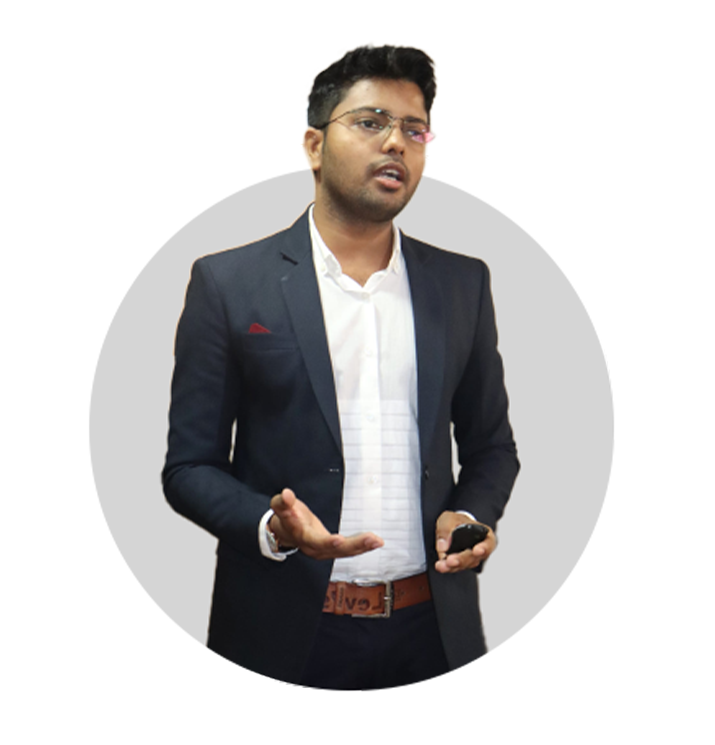
Arvind Chaurasiya, Founder UAutomate
Arvind is an AI practitioner and the founder of UAutomate. He specializes in designing production-ready AI agents, voice bots, and LLM orchestration systems that deliver measurable business outcomes for business.
Connect on LinkedInReady to Deploy AI in Your Business?
UAutomate helps Singapore businesses build custom AI applications, voice bots, and multi-agent systems tailored to your unique workflows.
Book a Consultation