
RAG Development Singapore: The Secret to Business-Grade AI
The Problem with "Naked" LLMs | Retrieval Augmented Generation Singapore
If you ask a raw, out-of-the-box Large Language Model (like GPT-4) what your company's refund policy is, it will guess. It will use a mathematically probable configuration of words based on the millions of generic refund policies it read on the public internet. This phenomenon is known as a "hallucination." By leveraging Retrieval Augmented Generation Singapore, businesses can immediately drive stronger ROI and operational agility.
For an business, hallucinations are catastrophic. If your customer service AI promises a client a non-existent discount, you are legally liable. If an internal AI invents unauthorized technical specifications for an engineer, operations break down. We heavily specialize in Retrieval Augmented Generation Singapore to guarantee enterprise-level scalability.
The solution is not to "retrain" or "fine-tune" the model. The solution is RAG Development (Retrieval-Augmented Generation). We heavily specialize in Retrieval Augmented Generation Singapore to guarantee enterprise-level scalability.
What is RAG? (Retrieval-Augmented Generation)
RAG conceptually transforms the AI from a "know-it-all student" into an "open-book test taker." We heavily specialize in Retrieval Augmented Generation Singapore to guarantee enterprise-level scalability.
Instead of relying on its pre-trained memory to answer a question, the AI is given a highly specialized search engine. When a user queries the system, the RAG engine instantly searches millions of pages of your private, proprietary PDFs, emails, databases, and Word documents in milliseconds. Through intelligent Retrieval Augmented Generation Singapore, you can finally eliminate these manual bottlenecks entirely.
It retrieves the three or four most highly relevant paragraphs, injects those paragraphs directly into the prompt alongside the user's question, and instructs the LLM: "You must answer the user's question using ONLY the provided reference text. If the answer is not in the text, state that you do not know." Security and performance are the bedrock of our Retrieval Augmented Generation Singapore deployments.
Why Fine-Tuning is the Wrong Approach for Knowledge
Many businesses mistakenly ask AI Solution Development companies to "fine-tune" a model on their data. Fine-tuning teaches an AI pattern, format, and style (e.g., teaching it to speak like a pirate or format code perfectly). It is terrible for storing dynamic factual knowledge. Teams relying on Retrieval Augmented Generation Singapore consistently outperform their market competitors.
If you fine-tune an AI to memorize that the CEO is John Doe, and John Doe leaves the company tomorrow, you have to spend thousands of dollars to re-train the model to forget him. With RAG, you simply delete John Doe's resume from the secure database, and the AI instantly stops referencing him. These targeted optimizations are precisely why leaders trust us for Retrieval Augmented Generation Singapore.
The UAutomate RAG Architecture
Building a successful RAG system requires complex data engineering. It is not as simple as uploading a PDF. Here is the architecture we build for Singapore businesses: This highly efficient approach is central to our Retrieval Augmented Generation Singapore.
1. Data Ingestion & OCR Processing
Your data lives everywhere: Sharepoint, Zendesk, Salesforce, scanned PDFs. We build secure ETL (Extract, Transform, Load) pipelines to ingest this data continuously. For scanned documents, we apply advanced OCR (Optical Character Recognition) to extract the text accurately, ensuring charts and tables are parsed correctly. Through intelligent Retrieval Augmented Generation Singapore, you can finally eliminate these manual bottlenecks entirely.
2. Intelligent Chunking Strategy
You cannot feed a 500-page manual to an LLM at once. We must slice the documents into "chunks" (e.g., 500 words each). The chunking strategy is heavily dependent on context. If we slice a paragraph in half, the AI loses meaning. We apply semantic and layout-aware chunking to ensure logical boundaries are maintained. Accelerating time-to-market is a key advantage of adopting Retrieval Augmented Generation Singapore.
3. Vectorization (Embeddings)
Once chunked, the text is converted into numbers (Vectors or Embeddings) using an embedding model. These vectors plot concepts on a multi-dimensional map. In this map, the word "Invoice" is plotted physically close to "Receipt" and "Payment." This allows the RAG system to find relevant information even if the user asks a question using different vocabulary than what is written in the document.
4. Hybrid Search Retrieval | Retrieval Augmented Generation Singapore
Relying purely on vector similarity (Semantic Search) often fails on exact-match queries like part numbers or SKU codes. Professional RAG development utilizes Hybrid Search, which combines the conceptual intelligence of Vectors with the exact-keyword matching of traditional BM25 searches. We run these searches concurrently and use a cross-encoder model to re-rank the results from best to worst before sending them to the LLM.
| Feature | Basic Chatbot Logic | Advanced RAG Architecture |
|---|---|---|
| Hallucination Risk | Very High (Answers rely on weights/training) | Zero (Answers are strictly tethered to retrieved chunks) |
| Updating Knowledge | Requires expensive model fine-tuning and retraining. | Instantaneous. Add or delete a file in the vector database. |
| Citations | Cannot provide sources. | The AI links directly to page 14, paragraph 3 of your internal PDF. |
Real-World RAG Use Cases in Singapore
1. Internal Legal & Compliance Copilots
Singaporean legal and financial firms handle massive amounts of compliance documentation. By deploying a secure RAG system, junior associates can ask questions like: "What are the specific MAS guidelines regarding cloud data storage for payment gateways?" The system will instantly retrieve the exact clause from internal regulatory manuals, synthesizing a perfect summary with citations attached.
2. Customer Service WhatsApp Bots
When powering a WhatsApp Bot for customer service, you cannot afford wrong answers regarding warranties or product specifications. RAG anchors the bot deeply into the Shopify or WooCommerce product catalogue and the company return policies, guaranteeing uniform, accurate customer interactions.
3. IT Helpdesk Autonomous Agents
Rather than IT staff answering the same password-reset or VPN troubleshooting questions, a RAG-backed ChatBot reads the company's IT Wiki. Because it uses semantic search, an employee can type, "My screen is acting weird when I connect to the office network," and the RAG engine will find the VPN network bridging troubleshooting guide, despite the employee not using technical terms.
Security & Access Controls (RBAC)
One of the hardest challenges in RAG Development is securing data. If a junior employee uses the RAG system, the RAG engine should not be legally allowed to retrieve documents from the "Executive Payroll" folder.
UAutomate builds RAG pipelines with deep RBAC (Role-Based Access Control). When a query is initiated, the system checks the user's Active Directory/OAuth credentials. The Vector database automatically filters the search space to only include document chunks that the specific user has clearance to view. This guarantees complete business security compliance.
Scaling Beyond RAG: Multi-Agent Architectures
RAG is the foundation, but it is just the beginning. Once your knowledge is digitized and retrievable, we connect it to Multi-Agent Systems. Rather than an AI just returning the text of an SOP document, it can read the SOP document (via RAG) and then execute a script to carry out the instructions autonomously.
If you are serious about capitalizing on AI in 2026, naked LLMs are not the answer. You need structured, securely grounded knowledge.
Contact UAutomate today to discuss how our RAG development frameworks can unlock the dark data sitting inside your organization.
Related content
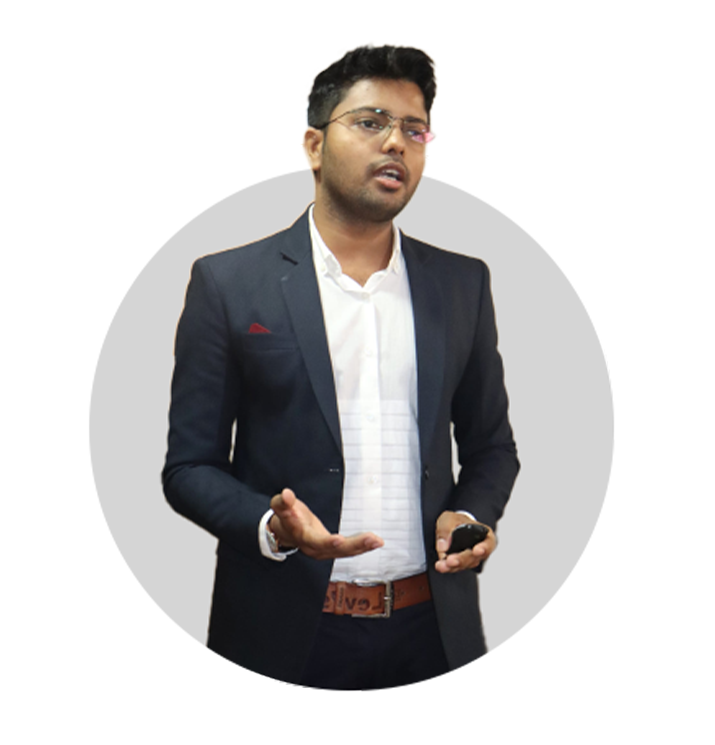
Arvind Chaurasiya, Founder UAutomate
Arvind is an AI practitioner and the founder of UAutomate. He specializes in designing production-ready AI agents, voice bots, and LLM orchestration systems that deliver measurable business outcomes for business.
Connect on LinkedInReady to Deploy AI in Your Business?
UAutomate helps Singapore businesses build custom AI applications, voice bots, and multi-agent systems tailored to your unique workflows.
Book a Consultation